
It seems obvious to us that death is what happens when a plant or an animal like ourselves looses the ability to feed and nourish itself and to protect itself from environmental hazards or from enemies. Such an unfortunate organism stops functioning and begins to–well–rot. Dust to dust. For living humans, the prospect can be terrifying.
So I find some consolation in learning that dying is not quite so monstrously monolithic. Depending on the long evolution of every species, dying consists of varied processes that have helped a species’ survival for the long haul.
John King’s book Reaching for the Sun: How Plants Work concludes with a fine chapter, “Getting Dead.” Without making a hullabaloo about it, the chapter dislodges the common assumption that all living things go about dying along roughly the same route.
For starters, King observes that: “Some kinds of organisms appear to be immortal.” Bacteria divide in two. Pieces of sponges become new sponges. Such clones never “die”! Buffalo grass goes about thwarting death by sprouting underground stems which may have been growing for the last 15,000 years. As for particular plants whose longevity has been studied, the oldest known specimen is a Bristlecone Pine named Methuselah, alive and well in California and coming up on its 5000th birthday. Methuselah in the Old Testament lived a mere, and a mythical, 969 years. The tree that takes his name has lived five times as long and is real.
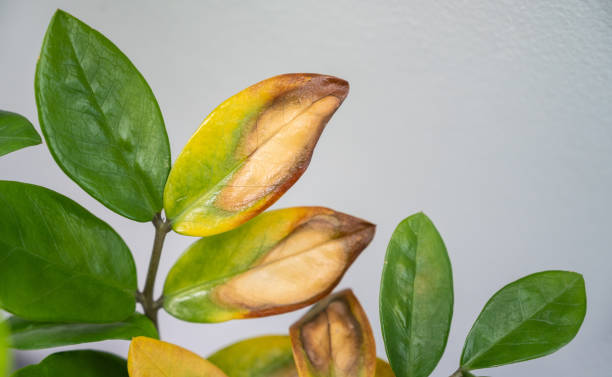
King’s point is that dying is not the looming Grim Reaper for plants that it is for humans, and that once a plant has done its best to meet its primary directive to reproduce, dying varies greatly. Most plants fall into one of two categories. Some live one or two years, bloom once, and die. In the process they produce many of the grains and the vegetables that we eat. Such plants die through senescence, the genetic program for the decay of all or of part (“autumn leaves”) of the plant.
Other plants, including trees, shrubs, and perennial flowering plants, produce seed repeatedly. King explains that these multi-blooming plants are more like us humans than the blooming-once plants; the perennials produce seed often and they don’t die by program. Instead, they get worn out, broken down, infected, and fail to function. In other words, they get old, as we do. Death from attrition and vulnerability, not design.
King’s description of the varieties in how plants die has made death itself refreshingly complicated to me. Dying seems less simplistic to me now, and more custom-cut for the species, part-euthanasia, part-scavenger, coming around on its own time, with many tools, sooner or later, or almost never.

