
Bill Bryson’s A Short History of Nearly Everything is an ideal read for those who are curious about science but shy away from the details. Bryson’s signature style—humorous and friendly—is easy on the comprehension and even evocative in its imagery.
The book, published in 2003, begins, “Welcome. And congratulations. I am delighted that you could make it. Getting here wasn’t easy, I know. In fact, I suspect it was a little tougher than you realize. To begin with, for you to be here now trillions of drifting atoms had somehow to assemble in an intricate and intriguingly obliging manner to create you.” You is a frequent word in the book.
Bryson explains the discovery of the Big Bang. In 1965 scientists heard a hiss in the reception from a communications dish, a noise that turned out to be the cosmic background radiation left over from the Big Bang. Bryson can’t resist:
Incidentally, disturbance from cosmic background radiation is something we have all experienced. Tune your television to any channel it doesn’t receive, and about 1 percent of the dancing static you see is accounted for by this ancient remnant of the Big Bang. The next time you complain that there is nothing on, remember that you can always watch the birth of the universe.

From the cosmos Bryson moves on to the earth. About the oceans, he writes:
There are 320 million cubic miles of water on Earth and that is all we’re ever going to get. The system is closed: practically speaking, nothing can be added or subtracted. The water you drink has been around doing its job since the Earth was young. By 3.8 billion years ago, the oceans had (at least more or less) achieved their present volume.
Fact and relevance, back and forth: “320 million cubic miles,” “all we’re ever going to get.” Scientists provide the facts; the humanist in Bryson brings home the meaning. The message here is not only an environmental nudge but also that our past, the past that created us, is all around us.
I was delighted to see Bryson write at length about the bacteria that were life itself for its first two billion years. These early eons are usually a tedious blur for those who are curious about the flowers, mammals, and humans that evolved later. But here is Bryson’s compelling discussion of ancient stomatolites, discovered in 1961, at Shark Bay in Australia:
Today, Shark Bay is a tourist attraction.…Boardwalks have been built out into the bay so that visitors can stroll over the water to get a good look at the stromatolites, quietly respiring just beneath the surface. They are lusterless and gray and look… like very large cow-pats. But it is a curiously giddying moment to find yourself staring at living remnants of Earth as it was 3.5 billion years ago….Sometimes when you look carefully you can see tiny strings of bubbles rising to the surface as they give up their oxygen. In two billion years such tiny exertions raised the level of oxygen in Earth’s atmosphere to 20 percent, preparing the way for the next, more complex chapter in life’s history.

The next step was the formation of cells that enclosed nuclei and lived on oxygen; they were bigger and more complex than their predecessors, and they eventually gave rise to us. Bacteria don’t get enough respect.
Bacteria may not build cities and or have interesting social lives, but they will be here when the Sun explodes. This is their planet, and we are on it only because they allow us to be.
Bryson’s vivid, colloquial writing reflects so much more talent and hard work than its easy-going quality suggests. And it is risky: in less capable hands it could be misleading, overgeneralized, sentimental. But Bryson succeeds at a task that is crucial today when science seems too cold to appeal to many people and conventional religion seems too hide-bound for others to swallow. Bryson makes scientific information evocative, personal, the stuff of life itself. He brings us up close to the reality that the history of the universe—from the Big Bang to the building blocks of life—is around us, is in us, and is us.
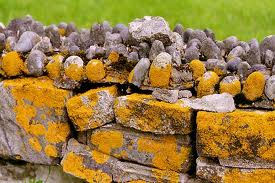
For example, about lichens: “Lichens are just about the hardiest visible organisms on Earth, but among the least ambitious.” They thrive in Antarctica and other harsh climates, and they are so successful that there are 20,000 species of them. They are very slow-growing and as a result are often hundreds if not thousands of years old.
As humans we are inclined to feel that life must have a point. We have plans and aspirations and desires. We want to take constant advantage of all the intoxicating existence we’ve been endowed with. But what’s life to a lichen? Yet its impulse to exist, to be, is every bit as strong as ours—arguably even stronger…. Like virtually all living things, they will suffer hardship, endure any insult, for a moment’s additional existence. Life, in short, just wants to be.
I couldn’t resist rendering this as verse:
We humans
Are inclined to feel
That life must have a
Point. We have
Plans,
Aspirations.
What’s life
To a lichen?
Its impulse to exist,
To be,
Is every bit as strong as ours–
Arguably
Even stronger.
They will suffer
Hardship, endure
Any insult,
For a moment’s
Additional existence.
Life
Just wants to be.
 Lives on Earth