
I presented this lecture at the college and community Science Seminar at Raritan Valley Community College in New Jersey in January 2016. My thanks to Dr. Paul Scheuler, organizer of the series. The talk focuses on three questions about life to which our biological history offers possible responses. It has been edited for length.
Finding Spirituality in Science
Introduction
Thank you for coming today. You may be wondering what a speech with a title that puts together the words science and spirituality will be about. What I want to talk about are some possibilities for using science’s description of evolution as a resource for addressing three big human questions that I think of as spiritual: How can I face my death? What is the foundation of love and hate, of good and evil? And what is the purpose of my life?
Usually the word spiritual refers to non-material and supernatural entities, to matters of the soul, spirit, ghosts, karma, and the like. I’m using it here instead to refer to human feelings and ideas about life’s biggest issues, issues that are not really covered by any other term.
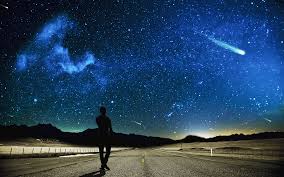
For many people today who approach spirituality in this secular sense, the central organizing story is what is known as the Universe Story or the Epic of Evolution—the development of the universe beginning with the Big Bang. It’s a story that gives us an epic comparable to traditional religious creation stories in that it tells us where we came from and where we fit in the scheme of things; it is our modern cosmology. Our atoms were molded in the births of stars, the emergence of galaxies and life itself is partly understood scientifically but is at the same time utterly miraculous, and indeed there is room in the epic of the universe to see the hand of God for those who are looking for it. Humans are distinctive in this epic, in the view of its proponents, in that we embody the part of the universe that has gained consciousness and thus, for some people, we might see ourselves as the universe coming to know itself. We have only to look up at the stars at night, they say, to feel that the universe is a sacred thing, that it is the source and foundation of our being.
But I have to tell you that for me personally the Universe Story goes only so far. The universe, even perhaps the solar system, is too big and too remote for it to do much more than remind me of my insignificance. The idea that my death will not be so terrible because my atoms will return to the universe of atoms from which they came, doesn’t do anything for me. I’ve always felt curiosity about the stars and planets and awe that they are out there in their majesty. But at some point in my life I began feeling questions of a sort that could not be answered by this “wow” reaction to the universe.
Such questions and moods come to different people at different times. My time came in my late 50s as I began to feel very strongly, hey, I’m really am getting older and this is getting to be serious. I’m getting closer to my final chapter and there are a bunch of things I’m still not clear about. What am I doing here? Is there a purpose in my life, a thing I’m supposed to be doing, or not? Is there some foundation for the difference between right and wrong that is bigger than me and deeper than society’s expectations? And then there is this nasty business of dying. I’m pretty sure that there is no other life after this one, so how am I going to face death with anything but fear? Such questions became urgent.
I couldn’t find answers to these questions in the epic of the whole universe because my questions were about life itself, so I began thinking about a narrower evolution, the emergence of life on the planet, our biological history. Gradually some connections have come clear. I’ll warn you that none of these may seem completely satisfactory to you. On some days, they aren’t completely satisfactory to me either. They don’t offer the certainty and fervor that traditional religions and a mystical mood can offer to religious believers. But maybe that’s just as well and I do think they’re a start.
Dying
Let’s start with the most dramatic issue, the fact that we will die. In what ways can science’s story of life itself, as understood by a generalist like me, console us about death. It can console us, I believe, because it reminds us that we are part of an incredibly long and vast chain of living things that has long preceded us and will long outlast us.
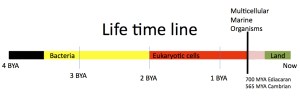
Consider that each of us has a genetic past that is more than three, almost four billion years long. That’s a 4 with nine zeroes after it. Go ahead, write it out. It makes “2025” look pretty puny. Pieces of our DNA go back all those hundreds of millions of years. We can’t wrap our minds around a number like that.
Nor can we easily appreciate a corollary of it, which is that for each of us, the line of our ancestors is unbroken. All our ancestors, as Richard Dawkins has put it, all 3 plus billion years of them, every single one, was a success. Each one survived long enough to reproduce. Each bacterium for the first 2 billion years whose DNA eventually led to us was a success. So was each of the first tiny, multi-celled creatures in the water. Each of the swimmy things that eventually crawled on to land. Each of the small mammals successfully dodging the footsteps of the dinosaurs 150 million years ago whom we can count as an ancestor was a success. Our recent human ancestors–over the last several million years!– they too were biologically successful.
Individually, then, we will die but the chain of living things that we are part of is massive and powerful and old beyond imagining. Look around you at every living thing you can see, imagine all of them, imagine the microbes that you can’t see, even the three pounds of bacteria that you carry inside you, imagine all that life that we belong to. My death will be another link in this massive chain, and that just may be okay. And all this life will stretch into the future for a long time to come. All that past and all that future may not be literal biblical immortality, but it is long enough for me.
Morality
Let me move now to a second question and my attempts to see if science’s description of life could help me with it. That question is, what is the moral basis of life, what are the roots of right and wrong, and how are the good actions that I try to take grounded in a larger natural order and not just in cultural traditions and social trends? Certainly, people look to the religions for answers about what is right and what is wrong and they rarely look to science. Scientists are fine with that. They emphasize that their field is about knowledge as best as they can establish it and not about judging human behavior.
Nonetheless, it’s been meaningful to me to learn about how pervasive are the roles of harmony and collaboration along with competition in the history of life on the planet. My argument here is that friendship, love, and moral good are rooted in organic cooperation, through pathways that aren’t fully understood, and that hatred and evil are similarly rooted in competition and its own long history. I am not saying that all cooperation is virtuous—certainly people can come together and collaborate in plans to do terrile things to other people—and I’m not saying that all competition is bad—healthy competition, between individuals, between groups, is real. I’m saying the reverse, that good and loving actions have their origins in ancient levels of cooperation and organization, and hatred and evil have their roots in competition when it is distorted by fear and envy.
I won’t say much about competition here because the survival of species best suited to the environment has become a byword since Darwin’s work. But coooperation, harmony, organization in biological evolution are all less familiar. They take their earliest form in living things as the organization of molecules in certain cells that enabled them to create energy and to expend it. And from early on, single bacterial cells even cooperated with each other. More than 3 billion years ago, bacteria organized themselves into stromatolites, layers of mats in piles that filtered sea water for sediment and chemicals. Stromatolites were the first communities and they can still be seen in Australia. A billion or more years later, single-celled creatures evolved into multi-celled ones whose various types of cells carried out specialized functions such as motion and sexual reproduction. We should appreciate this sort of organic coordination because the next step up, from multiple cells to multiple organs, is us. The harmony of our bodily systems working together is what keeps us alive. The same can be said of not only animals but also any flowering plant with its diverse flowers, leaves, stem, and roots.
The next level up of living coordination is the coordination among individuals in a species, especially bees, ants, and humans. Why and how did we humans get to be so sociable—and so clever at it, capable of loving one person one moment and plotting revenge against another one the next? Edward O. Wilson, the Harvard biologist who pioneered the field of sociobiology, explains that in humans, our irresistible tendency to form groups is both our virtue and our curse, the source of our unity and also of our bigotry. It comes in part from our organization as hunters:
In Africa roughly two million years ago, one species of the primarily vegetarian austalopithecines evidently began to shift its diet to include a much higher reliance on meat. For a group to harvest such a high-energy, widely disperse source of food, it did not pay to roam about as a loosely organized pack of adults and young….It was more efficient to occupy a campsite and send out hunters… Mental growth began with hunting and campsites. A premium was placed on personal relationships geared to both competition and cooperation.
Here then is what seems to me to be a basic answer to the question of the natural context for human morality. It is on the one hand our sociality and empathy, built on the ancient foundation of organic organization and cooperation. It is also the destructive instances of equally ancient struggle and competition. I can’t say that this understanding has changed my ethical behavior in any way. But it does clarify and confirm for me how deeply engrained in us our best and worst aspects are. The two paths of right and wrong are not solely the products of recent human culture or religion. They are as old as the stromatolites, as old as life itself.
Purpose
Now I’ll move on to my third and broadest question: What is our purpose in life? You may be able to guess where I am going with this one. I see the answer as Darwin probably saw it and as Wilson does see it. It is in the nature of living things to, above all, reproduce, and to survive until they can do so. Life for all plants and animals is about continuity in its two forms, the continuity of the individual in simply staying alive until he, she or it can reproduce, and the continuity of the species through time, by means of offspring.
That’s easy enough to say about the purpose of plants and animals, but humans? Is my life, your life, really about, at its most profound level, surviving and reproducing? I will argue that it is.
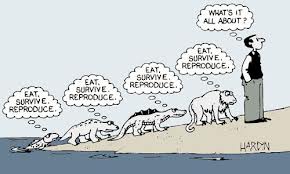
Let’s look at survival first. Our brains were molded over millions of years when physical survival, especially having enough to eat, was touch and go every day of the year. Such desperation is still the case today for many people on the planet. But you might well ask, it isn’t true for the average person here in suburban New Jersey, is it?
Our brains haven’t changed much in that short time and, for better and worse, concerns about survival are always just under the surface, driving more aspects of our lives than we like to admit. Food, money, violence, disease, even the weather, are almost always on our minds. You should have seen the crowds in the supermarket on the day before the blizzard blew in last week. And how many of you are thinking right now about lunch? Are you worrying about someone you’re close to who is suffering from illness or injury? Are you thinking about money, the coin of survival for humans? Are you outraged about guns, about the dangers of either having then or not having them? What about terrorists? Car accidents? GMOs? All such concerns are about survival. Even when they are not life and death matters, they are never far from it.
Still, that observation seems crude. What about the purpose of life in the higher sense, whatever that means? What about the meaning of life that is supposed to be a precious, obscure secret. I think the answer to that question concerns reproduction, and not just biological reproduction.
Certainly, for many people, both men and women, having children and raising a family is the cornerstone of their lives, their greatest pride, an achievement that allows them to feel a little easier on their deathbeds. But for humans, reproduction of oneself takes many different forms. Our future is alive in our imagination and ambition as well as in our yearning for biological offspring. In much the same way that we hope to see ourselves reflected in and carried into the future by our children, people also hope to see themselves reflected in and carried into the future by achievements of many kinds, by our influence on students or voters, by our fame, by our quiet caring for friends and family, by our social service to the poor or our medical service to the sick, or by works of literature or other art that we create. Such self-fulfillment has its ancestry in the reproductive instincts that also drive animals, plants, even bacteria.
So the question was, what is the purpose of life? My perhaps not entirely satisfying answer is that being alive is, in and of itself, purposeful. It is always full of needs, drives, and goals. Not just for humans but for growing plants and hungry birds as well. Our goals, in one form or another, are the intrinsic ones: to stay alive, to foster other life, to live into the future.
Let me close with this thought, especially for the science students here. Science is supposed to be an unemotional business. The scientific method is designed to start with a hypothesis and then to pull away from it as much human bias, error, and subjectivity as possible. The conclusions are cautious, the accumulated knowledge wins respect slowly. But I urge you to do the opposite: to take science personally at certain times. When you come across a bit of scientific information that catches your attention for some reason, when it make you feel a tingle in the back of your neck, grab it. Ask yourself what it is that resonates for you, how it changes the way you thought things were, how it fits in your view of life. Make it personal, in other words. Make it maybe even a little bit spiritual.
Thank you.
 Lives on Earth